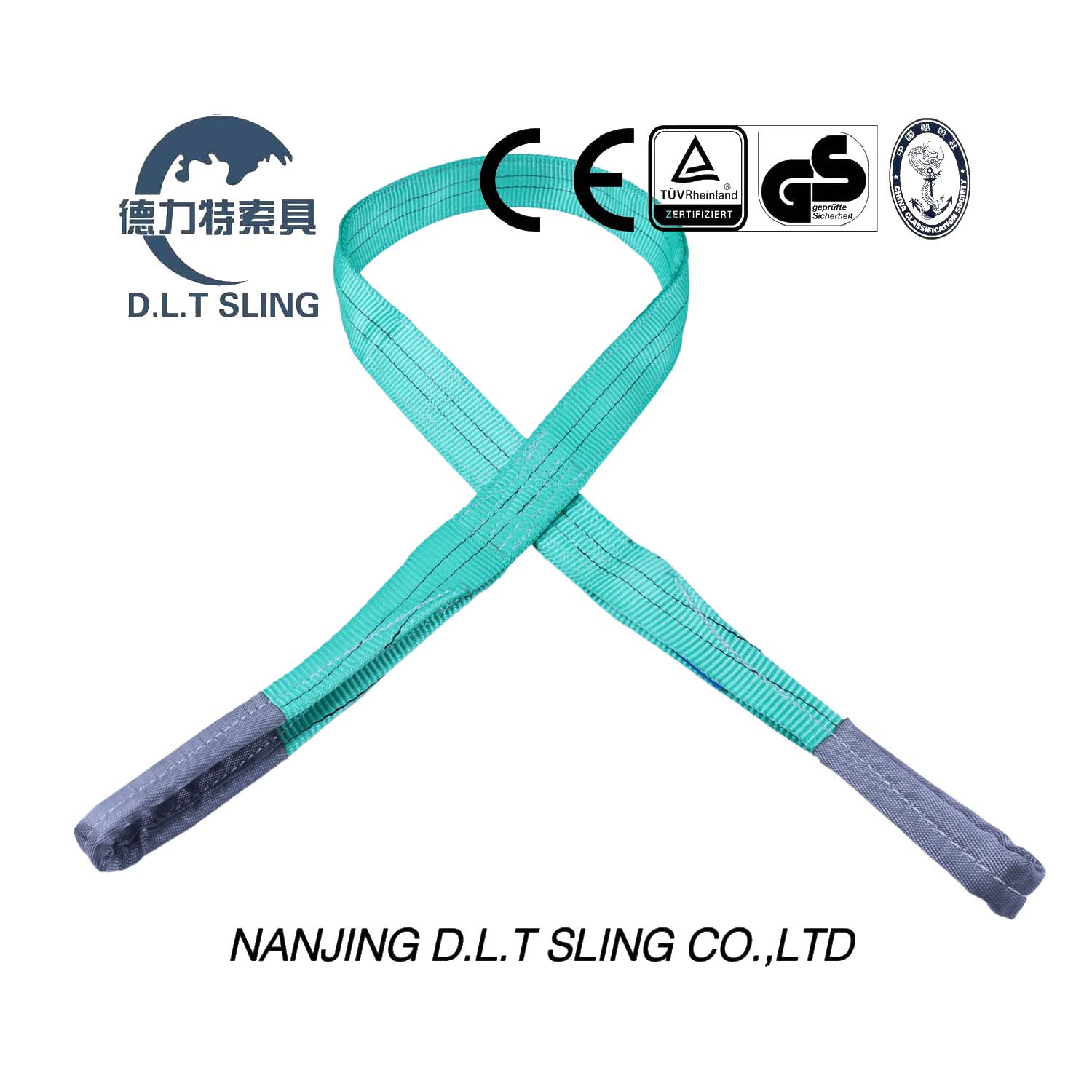
Webbing slings are widely used for lifting and handling heavy loads in construction, manufacturing, warehousing, transportation, and other industrial applications. Made from high-strength synthetic fibers, polyester webbing slings offer flexibility, lightweight handling, and excellent load protection when used correctly.
However, like all lifting equipment, webbing slings can deteriorate over time due to abrasion, cutting, chemical exposure, excessive heat, and improper handling. Using a damaged sling can lead to load instability, equipment failure, or serious accidents.
Inspecting a webbing sling before every use is an essential step in safe lifting operations.
In this guide, we explain how to inspect a webbing sling, what signs of damage to look for, when a sling should be removed from service, and how proper storage can extend its service life.
Before inspecting the sling itself, check that its identification label is present and legible.
The label provides essential information for determining whether the sling is suitable for the intended lifting operation.
Depending on the sling type and applicable standard, check the following information:
Working Load Limit (WLL): The maximum permitted load under the specified lifting configuration.
Sling material: Confirm that the material is suitable for the working environment.
Sling length: Verify that the length is appropriate for the lifting task.
Manufacturer identification: Check the manufacturer's name or other identifying information.
Applicable standard: Confirm that the sling meets the required product standard.
Safety information: Review any warnings or usage instructions provided with the sling.
Also check the sling's color coding where applicable. For standard polyester lifting slings manufactured according to EN 1492-1, the standard color coding helps identify the nominal WLL.
Never rely on color alone to determine a sling's capacity. Always check the identification label.
Important: If the label is missing, illegible, or does not provide sufficient information to verify the sling's capacity and suitability, do not use the sling until it has been properly identified and assessed by a competent person.
After checking the label, carefully examine the entire length of the webbing.
Move along the sling from one end to the other, checking both sides and paying particular attention to areas that may come into contact with the load, lifting hooks, or other equipment.
Look for the following signs of damage.
Cuts, tears, and severe nicks can reduce the strength of the webbing and may cause the sling to fail under load.
Pay particular attention to:
Sharp edges on the load.
Contact points with metal hooks.
Areas where the sling passes around corners.
Sections that have been dragged across rough surfaces.
Remove the sling from service if you find cuts or tears that meet the applicable rejection criteria. Do not attempt to repair a damaged load-bearing webbing sling with tape, glue, or unauthorized stitching.
Repeated friction can wear down the webbing fibers and reduce the sling's strength.
Signs of excessive abrasion include:
Frayed or heavily worn fibers.
Significant surface damage.
Localized thinning of the webbing.
Damage concentrated around contact points.
Minor surface fuzzing may occur during normal use, but its acceptability depends on the severity, location, and applicable inspection criteria.
If the webbing shows significant wear or you are unsure whether the damage affects its integrity, remove the sling from service for assessment.
Check the webbing for broken yarns, pulled threads, and other abnormal changes in its structure.
A few loose surface fibers do not necessarily indicate that a sling must be discarded. However, extensive broken fibers, severe fraying, or damage affecting the load-bearing structure requires careful assessment.
Do not continue using a sling when its structural condition cannot be confirmed.
Check that the webbing lies flat and has not been knotted, twisted into an abnormal configuration, or permanently deformed.
Never use a knotted webbing sling to lift a load. Knots can significantly reduce the sling's effective strength and create unpredictable loading conditions.
The stitching is an important part of a webbing sling's construction, particularly around the eyes of flat webbing slings and the joining area of endless slings.
Inspect all visible stitching carefully.
Look for:
Broken or missing stitches.
Loose or pulled stitching.
Torn or damaged stitching threads.
Separation between stitched layers.
Signs that the stitching has been cut or repaired.
Damage around the sling eyes or joining area.
Pay special attention to areas exposed to hooks, sharp edges, and repeated bending.
If load-bearing stitching is damaged or the stitched joint is separating, remove the sling from service. Do not attempt unauthorized repairs.
For endless round slings, also inspect the protective outer sleeve for cuts, tears, abrasion, or other damage. The sleeve protects the internal load-bearing fibers, so any suspected damage to the core must be evaluated before further use.
A sling should not be used if damage prevents reliable assessment of its load-bearing components.
Different types of webbing slings have different construction features, so the inspection should reflect the sling design.
For flat webbing slings with eyes, check:
The condition of both eyes.
Wear where the eyes contact lifting hooks.
Cuts, tears, or abrasion around the eye sections.
Damage to protective sleeves, if fitted.
Deformation or damage to any attached hardware.
Eye damage is particularly important because these areas often experience concentrated contact and friction during lifting.
For endless round slings, check:
The condition of the outer protective sleeve.
Cuts, tears, and abrasion along the sleeve.
Exposed or potentially damaged internal fibers.
Abnormal lumps, flattening, or other changes in shape.
Signs of contamination or chemical damage.
A damaged protective sleeve may indicate that the internal load-bearing fibers are also at risk.
If the core is exposed, damaged, or cannot be reliably assessed, remove the sling from service.
If the sling includes metal hooks, links, or other fittings, inspect these components separately.
Look for cracks, deformation, excessive wear, corrosion, and damaged safety latches where fitted.
Make sure the fittings are compatible with the intended lifting arrangement and that no component is visibly damaged.
Do not use a sling with defective fittings.
Synthetic webbing slings can be affected by excessive heat and incompatible chemicals.
Even when damage is not immediately obvious, exposure may weaken the material.
Look for:
Melted or glazed fibers.
Burn marks.
Hardened or unusually stiff areas.
Discoloration associated with heat exposure.
Other abnormal changes in the webbing's texture or appearance.
If a sling has been exposed to excessive heat or shows signs of thermal damage, remove it from service for assessment.
Check for unusual discoloration, swelling, softening, brittleness, surface deterioration, or other changes that may indicate chemical exposure.
Polyester slings generally offer good resistance to many common substances, but their suitability depends on the chemical involved, its concentration, temperature, and exposure duration.
If a sling has contacted an unknown or potentially incompatible chemical, do not assume it is safe simply because no obvious damage is visible.
Consult the manufacturer's guidance before returning the sling to service.
A sling may appear to be in good condition but still be unsuitable for a particular lifting operation.
Before use, confirm that the sling's rated capacity and configuration are appropriate for the load.
Check the following:
Load weight: Confirm that the total load does not exceed the permitted capacity of the lifting arrangement.
Sling configuration: Verify whether the sling will be used vertically, in a basket hitch, in a choker hitch, or in another approved configuration.
Sling angle: For multi-leg arrangements, ensure that the sling angle and resulting leg forces remain within the permitted limits.
Load balance: Make sure the load is stable and the center of gravity has been considered.
Contact points: Protect the sling from sharp edges and abrasive surfaces.
Environmental conditions: Confirm that temperature, chemicals, and other working conditions are suitable for the sling material.
The WLL shown on the label must not be treated as a universal capacity for every lifting arrangement.
The permitted capacity can vary according to the hitch, sling angle, and other conditions specified by the manufacturer and applicable standard.
When the configuration or load cannot be assessed confidently, consult a competent lifting professional before proceeding.
A webbing sling should be removed from service when it is damaged, its condition cannot be reliably assessed, or it no longer meets the applicable inspection criteria.
Common warning signs include:
| Inspection Area | Warning Signs |
|---|---|
| Identification label | Missing or illegible label; capacity cannot be verified |
| Webbing | Significant cuts, tears, abrasion, or structural damage |
| Fibers | Extensive broken yarns or severe fraying |
| Stitching | Broken load-bearing stitches or separating joints |
| Sling eyes | Severe wear, cuts, or damage around contact areas |
| Round sling sleeve | Cuts, tears, or suspected damage to the internal core |
| Heat exposure | Melting, glazing, burning, or other signs of thermal damage |
| Chemical exposure | Suspected chemical degradation or abnormal material changes |
| Attached fittings | Cracks, deformation, excessive wear, or defective safety latches |
| General condition | Any defect that makes safe use uncertain |
This table is a practical guide, not a substitute for the rejection criteria in the applicable standard or the manufacturer's instructions.
Do not attempt to determine a sling's remaining strength by visual appearance alone. If a defect is identified, remove the sling from service and have it assessed by a competent person.
Never use a sling that has been rejected, and do not return it to service unless it has been appropriately evaluated and any permitted corrective action has been completed. Damaged load-bearing webbing slings should not be repaired through unauthorized methods.
Inspection frequency depends on the sling's application, operating conditions, frequency of use, and applicable safety requirements.
A practical inspection approach includes the following.
The user should visually inspect the sling before each lifting operation. Check the identification label, webbing, stitching, eyes or protective sleeve, and any attached fittings.
If damage is found, do not use the sling.
Slings should also be included in the workplace's planned lifting-equipment inspection program.
The inspection frequency should reflect the manufacturer's recommendations, applicable regulations and standards, service conditions, and the sling's usage history.
Additional inspection may be necessary after events such as:
Overloading or suspected overloading.
Contact with sharp edges that may have damaged the webbing.
Exposure to excessive heat or chemicals.
Unexpected shock loading.
A lifting incident or other event that may have affected the sling's integrity.
Where required, a competent person should conduct a more detailed examination.
A pre-use visual check does not replace periodic inspections or any formal examination required by the applicable regulations and standards.
Correct storage helps protect webbing slings from avoidable damage and supports longer service life.
Follow these recommendations:
Store slings in a clean, dry, and well-ventilated area.
Keep them away from direct heat and incompatible chemicals.
Protect them from prolonged exposure to sunlight and other sources of ultraviolet radiation where required by the manufacturer.
Avoid contact with sharp objects and abrasive surfaces.
Do not leave slings exposed to unnecessary moisture or contamination.
Keep slings away from welding sparks, hot surfaces, and other potential sources of thermal damage.
Follow the manufacturer's instructions for cleaning and drying.
Before returning a stored sling to service, inspect it again to confirm that it remains in suitable condition.
Proper storage cannot restore the strength of a sling that has already been damaged.
Use the following checklist as a quick reference before lifting.
| No. | Inspection Item | Check |
|---|---|---|
| 1 | Identification label is present and legible | ☐ |
| 2 | Working Load Limit is suitable for the load and configuration | ☐ |
| 3 | Webbing has no unacceptable cuts or tears | ☐ |
| 4 | No excessive abrasion or structural fiber damage is visible | ☐ |
| 5 | Stitching and joints are in acceptable condition | ☐ |
| 6 | Sling eyes are free from unacceptable damage | ☐ |
| 7 | Round sling protective sleeve is in acceptable condition | ☐ |
| 8 | No signs of harmful heat or chemical damage are present | ☐ |
| 9 | Attached fittings, if any, are in acceptable condition | ☐ |
| 10 | Sling length and configuration are suitable for the lifting task | ☐ |
| 11 | Contact points are protected against sharp edges where necessary | ☐ |
| 12 | The sling is suitable for the operating environment | ☐ |
If any item fails the applicable inspection criteria, do not proceed with the lift until the issue has been resolved.
A checklist supports a consistent inspection process, but it does not replace competent judgment or the requirements of the applicable lifting standard.





 IPv6 ПОДДЕРЖИВАЕТСЯ СЕТЬЮ

 Электронная почта
: sales@dlt-sling.com

 Получить цену